The way I see it, digital gaming has become what coffee is to the modern professional: a near-daily ritual, recession-resistant, and remarkably sticky. In idle moments, in downtime, in the spaces between — people reach for it. The market is enormous. The question is who's capturing it.
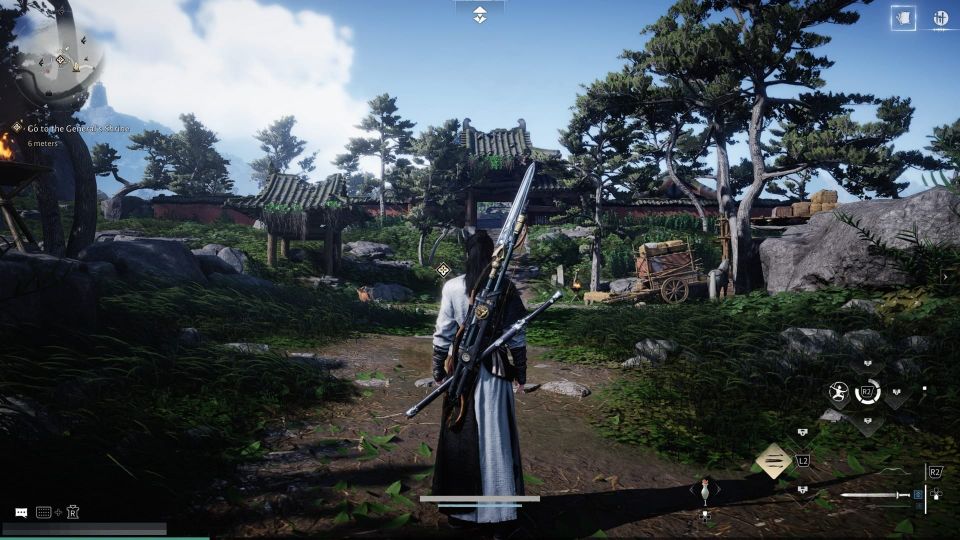
A few weeks ago, I came across news of a mobile action-MMO called Where Winds Meet. The hype was loud enough that even friends outside the gaming world were talking about it. I watched the gameplay footage and was genuinely struck...not just by the visuals, but by what they represented. A decade ago, an experience like this would have demanded a high-end desktop and hours of setup. Now it lived in someone's pocket.
It pulled me back. I spent years (and more money than I'd care to admit) deep in an MMORPG during my younger days. I knew firsthand how consuming these worlds could be. What I was seeing with Where Winds Meet was that same pull, but more refined, more accessible, and available to an audience ten times the size.
That got me thinking: who builds these things? And more importantly, are they making money?
The way I see it, digital gaming has become what coffee is to the modern professional: a near-daily ritual, recession-resistant, and remarkably sticky. In idle moments, in downtime, in the spaces between...people reach for it. The market is enormous. The question is who's capturing it.
That's when I found NetEase.
The One-Liner
NetEase is China's second-largest game developer, a company that builds and operates its own games, on its own technology, for decades at a time.
Most businesses with $23.4 billion in net cash, free cash flow conversion above 100%, 64% gross margins, and 20-year-old games still breaking concurrent player records would command a premium valuation. NetEase trades at 15x earnings, a multiple more consistent with a struggling cyclical than a cash-compounding content machine. That disconnect is the paradox. Not whether this is a quality business, but why the market prices it like it isn't. The answer sits in three persistent shadows: regulatory overhang, founder concentration, and a VIE structure that makes legal ownership of the underlying business technically ambiguous. Whether those shadows represent genuine mispricing or fair compensation for structural risk that simply won't go away. This is the question this analysis is built around.
The First Principles Brief
What the Business Does
NetEase, Inc. is listed on the Nasdaq under the ticker NTES and on the Hong Kong Stock Exchange under stock code 9999, commonly shown as 9999.HK.
NetEase is a premium content developer with technical sovereignty. It builds games in-house, runs them on proprietary engines, and monetises them through microtransactions. These would include in-game cosmetics, virtual items and battle passes, rather than upfront sales. Mobile accounts for roughly 73% of gaming revenue, with PC and console growing as titles like Marvel Rivals and Naraka: Bladepoint gain global traction. 1
The portfolio spans two ends of a spectrum. At one end sit evergreen franchises: Fantasy Westward Journey (launched 2003, 3.58 million peak concurrent players in 2025 2) and Westward Journey Online II (launched 2002, still generating cash flow after 24 years). These aren't legacy holdovers — they function as annuity streams, with deeply embedded player communities built on years of character progression, guild bonds, and social identity. NetEase treats them as living economies, actively managing in-game inflation so virtual assets retain value across decades.
At the other end, NetEase still creates blockbusters. Marvel Rivals drew 10 million players within 72 hours of its December 2024 launch and reached 40 million registered users by February 2025. 3Where Winds Meet accumulated 80 million cumulative players. Eggy Party commands 40 million daily active users in casual gaming.
Beyond games, NetEase operates Youdao (education technology), NetEase Cloud Music (China's #2 music streaming platform), and Yanxuan (e-commerce). But these are peripheral. This is, at its core, a games business, and the investment case is priced accordingly.
Why the Business Exists
NetEase was built on a single conviction: in a digital economy where most content decays, premium proprietary IP compounds.
Founder William Ding refused the binary choice facing most early Chinese internet companies as to become a traffic aggregator or a licensed distributor of foreign content. Instead, since 1997, NetEase has operated on what it calls the Self-Development Mandate: own the IP, own the engine, own the relationship with the player. 4
The customer insight driving this is precise. Players don't just buy games. They buy emotional and social outcomes: mastery, belonging, status, escape. In live-service models, they're buying an ongoing relationship with a world that evolves around them. NetEase's business exists to build those worlds and sustain them — not for a product cycle, but for a generation.
Two macro conditions make this viable. China is one of the world's largest game markets, with domestic sales surpassing RMB 325 billion in 2024. 5 And Chinese-developed content is increasingly competitive globally, with production values and live-operations infrastructure that travel across borders. The structural (rather permanent) constraint is regulatory. Chinese authorities can and do alter access and monetisation rules. Minor playtime restrictions remain in force. That friction is baked into every valuation discussion about this company.
How the Business Succeeds
NetEase makes money by converting player attention into recurring digital spending. And it does so at margins that most entertainment businesses cannot match.
Self-developed titles carry gross margins of 67–70%, versus significantly lower margins on licensed games. 6 The Blizzard partnership (restored in 2024 after a 14-month hiatus, bringing back World of Warcraft, Hearthstone, and Overwatch 2), boosted revenue but compressed margins through revenue-sharing arrangements. That trade-off is instructive: licensed Western IP provides stable cash flow, but self-developed content captures the full value chain.
Continue reading with a free account.
Join free to access the complete First Principles Brief.
You might also like
Sep 19
VICOM: When Durability Matters More Than Growth
An economy cannot let vehicle owners certify that their own cars are roadworthy. Someone independent and accredited has to check, and Singapore makes that check compulsory through the LTA. VICOM was established in 1981 to provide it.
21 min read
Sep 01
ANTA Sports: The Machine Behind the Brands
ANTA built China’s largest sportswear group by making brands economically stronger through retail execution. Its next test is whether that machine can keep compounding as the brands and investments become larger, more expensive and harder to control.
26 min read
Aug 01
MoneyMax: Where Gold Meets Liquidity
A person owns something valuable, a gold chain, a wedding ring, a branded watch, and needs cash the object cannot directly provide. MoneyMax stands at that gap. It will lend against the item and hold it as security, or buy it outright, and it will also sell such items to someone else.
19 min read
Jul 27
Digital Core REIT: When Digital Becomes Physical
The economic value of what the REIT owns is not ordinary floor space. It owns secured electrical capacity, cooling infrastructure, network connectivity, physical security and resilient building systems, located in markets where new supply is constrained.
14 min read
Jul 15
Trip.com: Is Travel Still the Product, or Is the Platform the Asset?
The business itself made intuitive sense. Travel is not a fad. People still want to move, explore, visit family, take holidays, and experience places beyond where they live. The form of travel may change. The human desire behind it is unlikely to disappear.