VICOM: When Durability Matters More Than Growth

The One-Liner
VICOM runs Singapore's largest vehicle inspection network. It also operates a broad testing and certification arm. Together, these businesses turn regulated, repeat demand into high returns and reliable dividends.
Its 2025 revenue jumped forty per cent, but that lift came mainly from a one-off government project that runs to completion at the end of 2026 and then falls away.1 2 Underneath sits a durable, cash-generative business whose regulated core grows slowly, while its testing arm may still expand and its dividends contribute meaningfully to owner returns.
But I could not see much evidence of growth. Revenue had barely moved over the years, and neither had the share price. At first glance, there did not seem to be much happening. But that also made something else easy to overlook: the figures had remained remarkably steady.
That was the more interesting part. Slow growth and high returns can sit together. VICOM looked like a business that earned well and generated cash, even if it had few places to reinvest that cash at the same rate.
So I stripped the question back to the business itself. What does VICOM actually do, and why does it earn the returns it does?
At its core, it is almost absurdly simple. Vehicles have to be inspected to stay on the road. Someone independent has to be trusted to do it. VICOM does it, repeats it, and collects the cash. The same thing that makes the business predictable, a compulsory service in a market the government deliberately keeps small, is also what limits the core.
That was the part that interested me. Limited growth did not necessarily make it a bad business. It just meant the business had to be judged differently.
When does durability matter more than growth?
What This Business Actually Is
VICOM Ltd was incorporated in Singapore in 1981 and is listed on the Singapore Exchange (SGX) Mainboard under the ticker WJP.3
The company does two related things. The first is vehicle testing. Under rules set by the Land Transport Authority (LTA), most vehicles in Singapore must pass a periodic roadworthiness inspection to stay legally on the road, and VICOM performs these inspections through its VICOM and JIC Inspection centres. In 2025 the Group completed 519,088 inspections and held a 72.3% share of the market, with the balance served by STA Inspection, the other authorised operator.4
The second business is non-vehicle testing, run through its subsidiary SETSCO. This is a testing, inspection and certification (TIC) operation, meaning independent laboratories and inspectors that verify whether a material, product, building or process meets a required standard. SETSCO covers construction and civil works, materials and non-destructive testing, environmental and calibration work, food and microbiology, and a growing electronics practice. In 2025 that electronics work was busy, helped by companies making artificial-intelligence-related semiconductors and servers, and by manufacturers moving supply chains in response to tariffs. The Group also opened a testing joint venture, SETSCO QAV, in Penang.5
The customer groups sit either side of that split. Vehicle testing serves motorists and fleet owners who have no choice but to be inspected, plus the LTA itself, for whom VICOM installed more than 251,000 Electronic Road Pricing (ERP) 2.0 On-Board Units (OBUs) during 2025 as one of four appointed partners.6 Non-vehicle testing serves builders, manufacturers and electronics firms who need an accredited third party to certify quality and safety. VICOM is the dominant inspector in the first market and a leading independent laboratory group in the second.
Why This Business Exists
An economy cannot let vehicle owners certify that their own cars are roadworthy. Someone independent and accredited has to check, and Singapore makes that check compulsory through the LTA. VICOM was established in 1981 to provide it.7
The same principle built the second business. Builders, manufacturers and regulators all act on results they did not produce themselves, a weld that holds, water that is clean, a device that survives immersion. SETSCO supplies that independent verification across industries, extending VICOM's core skill, accredited testing that others trust, from vehicles to the wider economy.8
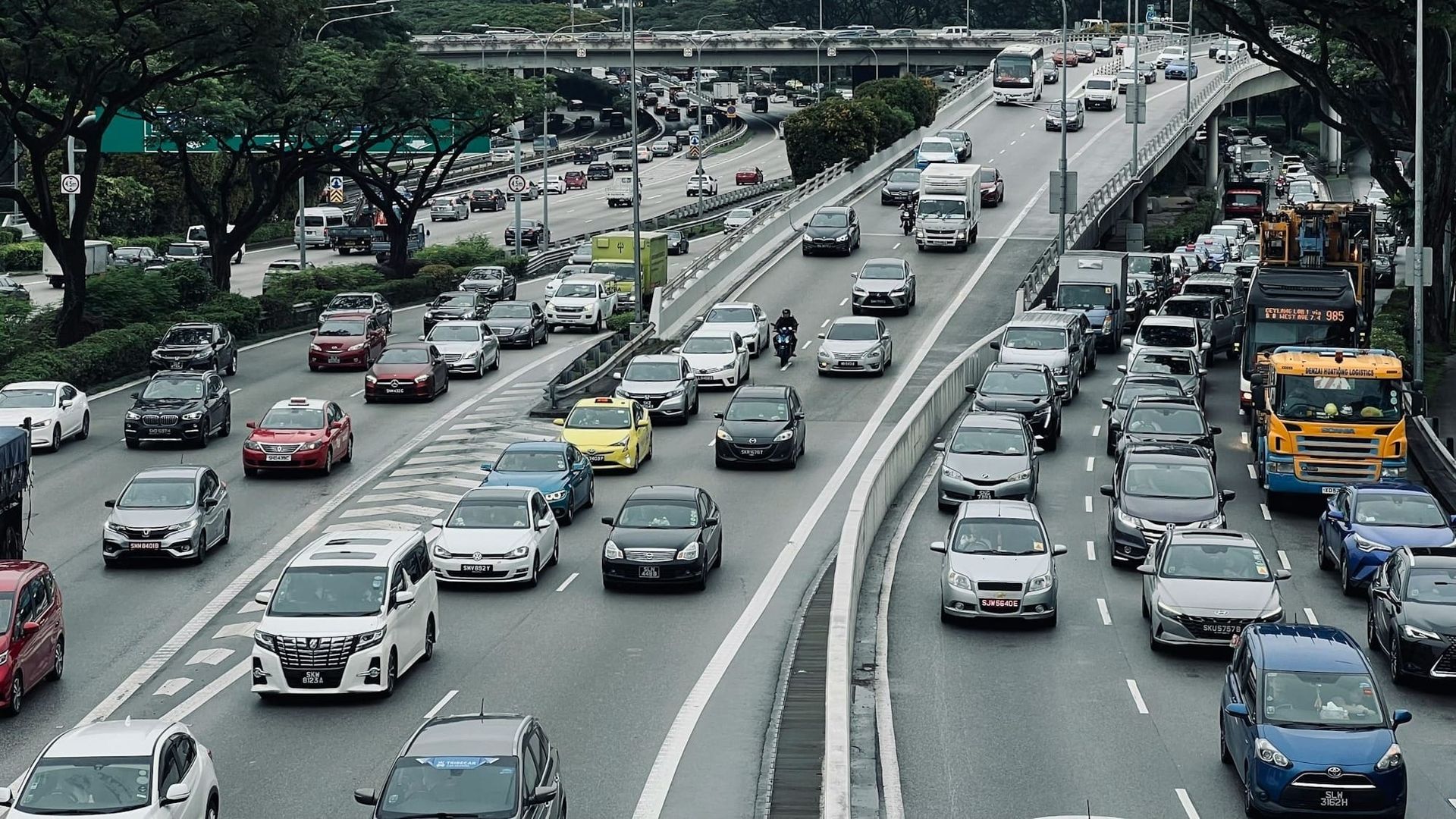
It helps to be precise about what growth would even mean here, because the forms of it are not the same. There is volume growth, more inspections and more tests. There is price and mix. There is expansion into adjacent testing. And there is the owner's return, which includes dividends even when the business itself grows slowly. Only one of these is clearly capped. Singapore controls the number of vehicles on its roads through the Certificate of Entitlement (COE) quota, so the fleet that needs inspecting expands slowly and only as far as policy allows, which limits volume growth in the vehicle core.
That is the central tension in VICOM. The same features that make the core durable, a regulated licence and a fixed, compulsory market, also limit how much its volume can grow. What the evidence does not yet settle is whether that constraint applies to the group as a whole. Pricing, the testing arm and the cash returned to owners are not bound by the vehicle quota, so those remain open questions.
How It Succeeds
The advantage rests on three sources that reinforce one another.
The regulated licence.
Only operators authorised by the LTA may perform Singapore's mandatory vehicle inspections, and there are very few of them. That authorisation is a real barrier to entry, and VICOM sits on the favourable side of it as by far the largest operator, serving demand that is non-discretionary because an owner who wants to keep driving must be inspected on schedule.9 A barrier to entry and a strong market position are not the same thing as a fully protected economic moat, however. The LTA sets inspection fees and decides how many operators and centres to authorise, so how much of that position converts into durable economics is a separate question, one the later section returns to.
Trust and accreditation.
In both businesses the product is really a trusted result. A VICOM inspection certificate and a SETSCO test report carry weight because regulators, insurers and customers accept them, and that acceptance is built slowly through decades of accreditation and reliability. Management viewed VICOM's leading OBU installation volume, the highest of the four appointed partners, as evidence of motorists' trust in the brand, though centre locations, capacity and execution could also explain it.10 Accreditation is expensive and slow to earn, which makes it hard for a new entrant to replicate quickly.
Join free to access the complete First Principles Brief.