Centurion Accommodation REIT: The Architecture of Essentiality
CAREIT listed on the SGX Mainboard on 25 September 2025 under stock code 8C8U, becoming Singapore's first pure-play purpose-built living accommodation REIT.
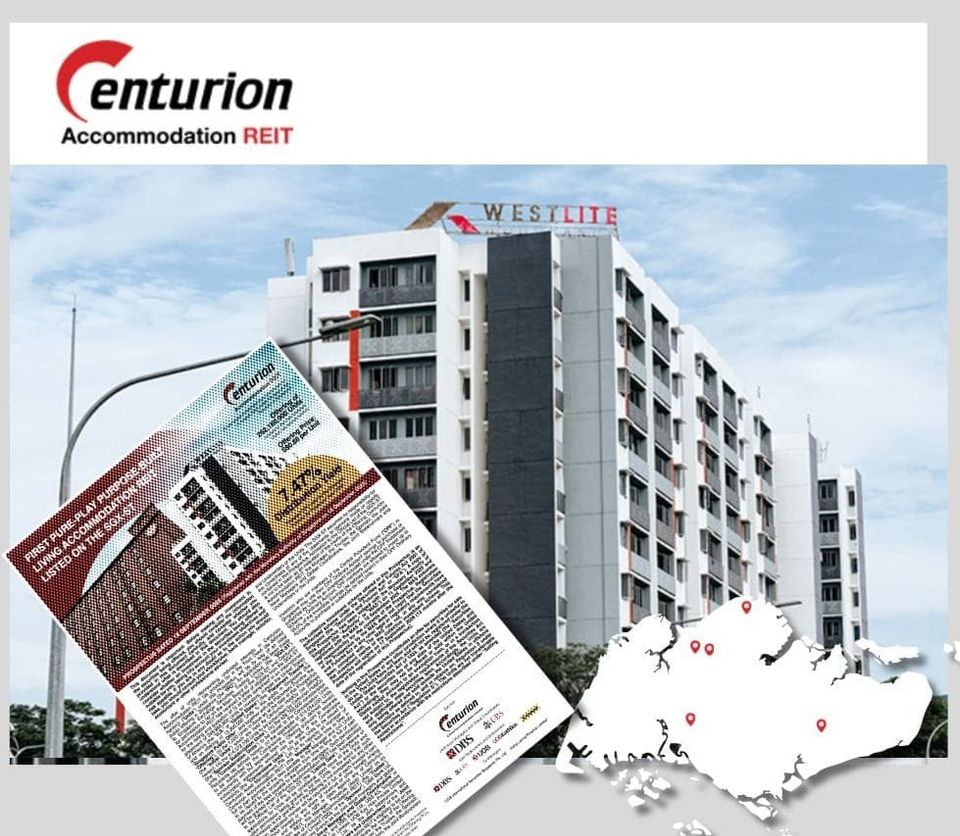
Centurion is a leading specialized accommodation provider that builds and operates mission-critical human infrastructure. It provides regulated housing for the global workforce and international students. The business yields a high-margin, recurring income through proprietary management and capital recycling.
CAREIT listed on the SGX Mainboard on 25 September 2025 under stock code 8C8U, becoming Singapore's first pure-play purpose-built living accommodation REIT.6
The IPO was priced at S$0.88 per unit. Units opened at S$0.98 on listing day and rose 9.1% by close, making it Singapore's second-largest listing of 2025, raising S$771.1 million in total proceeds.6 The public offer tranche was 30.9 times subscribed, the strongest retail response in recent years. The placement tranche was approximately 16 times subscribed by international institutional investors, real estate specialist funds, and high net-worth individuals.7
The initial portfolio comprised 14 assets valued at approximately S$1.84 billion: five PBWA assets in Singapore, eight PBSA assets in the UK, and one PBSA asset in Australia. With the subsequent acquisition of Epiisod Macquarie Park, the enlarged portfolio grew to 15 properties valued at approximately S$2.12 billion.6
Centurion Asset Management Pte. Ltd. (a wholly-owned subsidiary of Centurion Corporation Limited) serves as the REIT manager. That sponsor relationship is central to understanding the investment case.
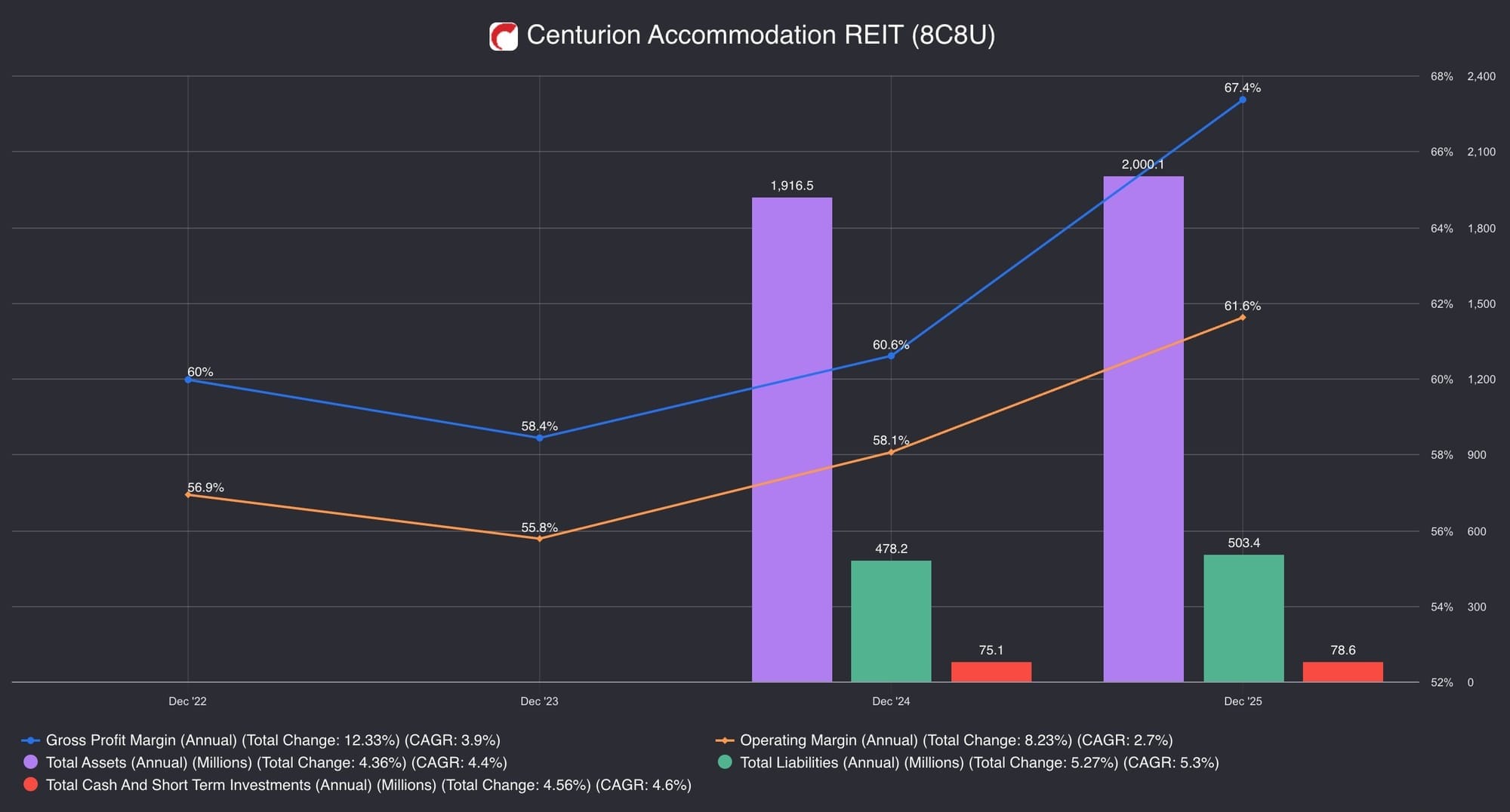
The chart below reflects CAREIT's financials since listing. Margin expansion and asset growth are visible. The dataset is early. Considering two reporting periods. But the trajectory is consistent with the annuity engine thesis.
Centurion was built on a single conviction: in a globalized economy, the physical presence of labor and students is non-discretionary, but the regulatory complexity of housing them creates a permanent supply bottleneck.1
The first principle of the business is the provision of essential, regulatory-compliant human infrastructure. As governments in Singapore and Malaysia aggressively elevate housing standards — through Singapore's FEDA regime and New Dormitory Standards — compliance becomes the ultimate barrier to entry. Centurion CEO Kong Chee Min built the business on a precise conviction: own the regulatory moat, and the market comes to you.4
The New Dormitory Standards mandate more space and better amenities by 2040, effectively rendering older, informal dormitories obsolete.4 As a pioneer of compliant assets, Centurion is positioned to capture premium rental revisions as non-compliant supply contracts elsewhere. Compliance is not a cost center here — it is the competitive engine.
The customer insight is precise: employers and students are not buying a bed. They are buying risk mitigation and accessibility. For a corporate client, a Centurion bed is a guarantee against labor unrest and regulatory violation. For a student, it is a guarantee of safety and academic proximity.1
Join free to access the complete First Principles Brief.