
When Numbers Create the Wrong Picture
The problem is what happens when context disappears.
Percentages without scale. Samples without populations.
Growth rates without starting values. Headlines without denominators.
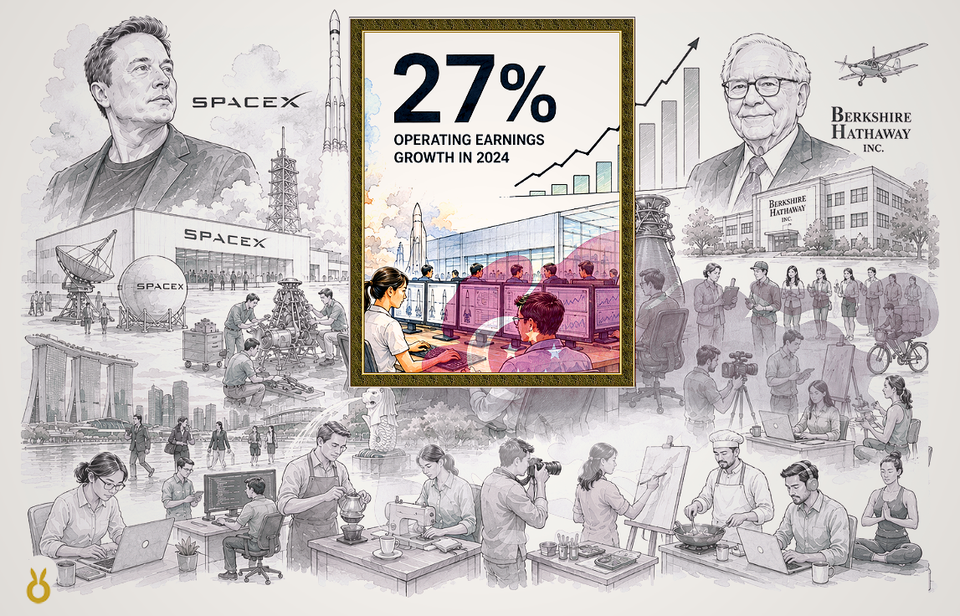
Numbers give the impression of precision.
But precision is not the same as understanding.
Sometimes the number is correct. Yet the picture it creates can be wrong.
A recent study found that only 14% of Singapore employees felt engaged at work in 2025, below both the global average of 20% and the Southeast Asian average of 25%. Among workers under 35, the figure dropped further, to 10%.1
The number travelled fast. Young workers are disengaged. The "strawberry generation" label appeared in coverage, a Taiwanese term for younger people perceived as too easily bruised, unwilling to work as hard as their parents' generation.
The report's own authors were more careful. Younger employees are frequently described as entitled or insufficiently committed, the report noted. But the senior leaders interviewed pointed to structural conditions rather than character: high cost of living, national service obligations, growing job uncertainty. The generational split is real, they concluded. The cause may be more complex than the label suggests.
And there is a deeper question the survey does not ask: engaged in what? The survey measured engagement within the frame of formal employment. That frame is not the whole picture of how people work. A full-time vlogger running a production schedule, managing a brand, and building an audience is deeply engaged in work.2 None of that shows up in a corporate engagement survey. The absence from the data does not mean the engagement is absent. It means the survey was not looking in the right direction.
Consider also who did not respond. Every survey reflects not only those who answered, but also those who chose not to.
The number told a narrow story. The headline implied a wider one.
When SpaceX listed publicly in June 2026, the headlines were striking. The company raised $75 billion. The largest IPO in US history. A valuation of $1.77 trillion on day one.3
True.
But roughly 4.3% of SpaceX's total shares were publicly floated at listing.4 Elon Musk retained approximately 42% of the equity and 82.4% of voting control after the offering.5
Roughly 95% of SpaceX remained in the hands of insiders, employees, and early investors behind lockup restrictions that stagger out over months.
That raises a question the headline does not answer. In December 2025, just six months before the IPO, a private tender offer valued SpaceX at approximately $800 billion.6 By listing day, the implied valuation had reached $1.77 trillion. More than double, in under six months.
The $1.77 trillion figure was not tested against the full company. It was set by trading activity on 4.3% of the shares. Whether the other 95.7% is worth that price has not been tested at all. The price of the fraction became the price of the whole.
The number accurately described the capital raised. The mental picture it created, of a company now broadly valued and publicly owned, was something different.
Berkshire Hathaway's operating earnings grew 27% in 2024, reaching $47.4 billion.7
Twenty-seven percent is not an ordinary number. It is a strong growth figure by any standard.
Berkshire grew from a base of $37.4 billion in operating earnings. A 27% increase on that base added roughly $10 billion in a single year. To put that in perspective: Brunei's entire GDP in 2024 was approximately $15 billion.8 Berkshire added two-thirds of a country's annual economic output as a single year's earnings increment. That is what the percentage is describing.
A small company posting 27% growth is a different event entirely. Same rate. Categorically different reality.
The question worth asking is not whether 27% is impressive. It is: 27% of what?
The growth rate tells you the rate of change. It says nothing about what is actually changing.
The number fit in a headline. What it measured did not.
These are not cases of misinformation. The numbers are accurate. The surveys are real. The IPO raised what it raised. Berkshire earned what it earned.
The problem is what happens when context disappears.
Percentages without scale. Samples without populations.
Growth rates without starting values. Headlines without denominators.
Context is where meaning lives.
Each number, taken alone, is precise. Each picture, stripped of context, is incomplete. And incomplete pictures lead to confident conclusions built on partial information.
This matters everywhere. In investing, the gap between the number and the picture can be the difference between a right call and a wrong one. But the same trap appears in any conclusion drawn too quickly from an incomplete frame.
Numbers do not just move markets.
They shape what we assume to be true.
Follow new research, company updates and analytical perspectives from Glavcot Insights. If you don’t see the confirmation email, check your spam folder.